Utilization of Binary Artificial Intelligence to Detect Plant Conditions Digitally
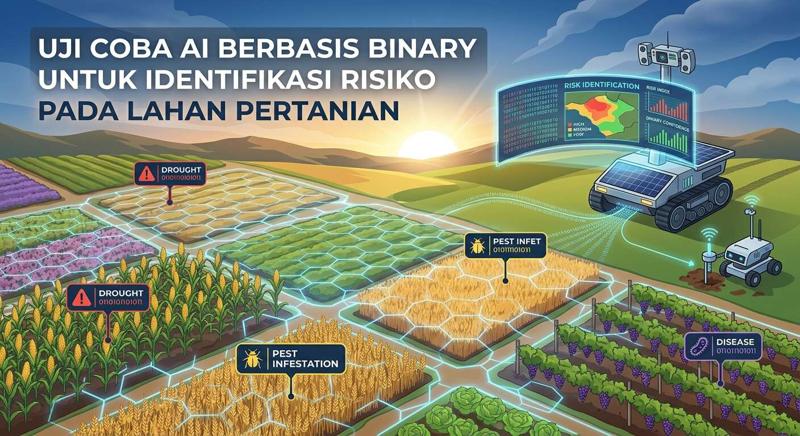
The condition of the plant is one of the important factors that determines the success of agricultural activities. Plants can experience various changes due to lack of water, changes in temperature, soil conditions, attacks by pest organisms, and other environmental factors. So far, monitoring of plant conditions has been carried out directly by farmers through visual observation.
This method is still important, but technological developments allow the monitoring process to be assisted by Artificial Intelligence. One technology that can be tested is a binary-based AI model. This model can be used to group plant conditions into two categories based on available data.
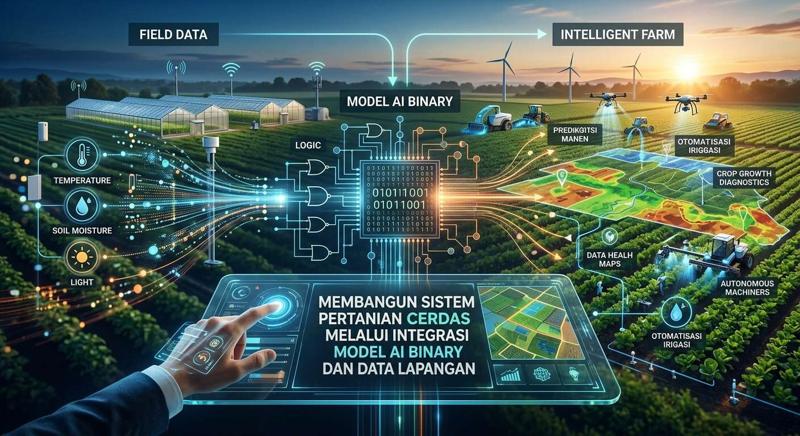
This application can be part of the concept of smart farming. The system can help process data originating from sensors and observation results so that farmers obtain information more quickly and in a structured manner.
Binary Classification in Plants
Binary classification is a classification method that divides data into two classes. In a plant monitoring system, these two classes can be adjusted according to needs.
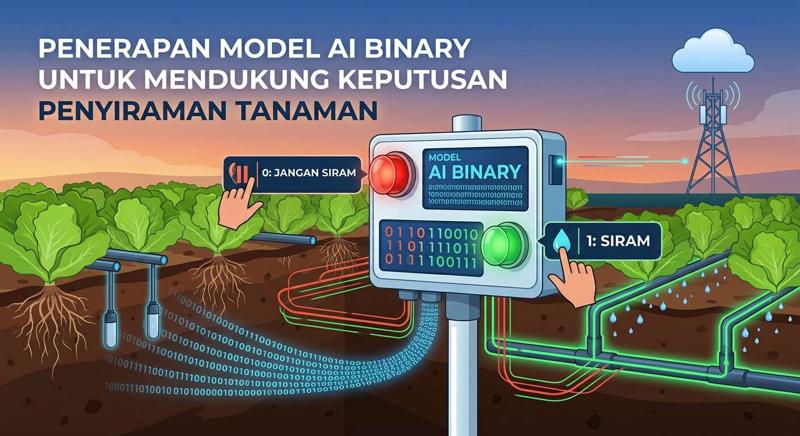
For example, the first class can be labeled 0 which means the plant is in normal condition. The second class is labeled 1, which means the plant requires inspection.
The model does not directly know the meaning of the numbers 0 and 1. This meaning is determined by the system developer based on the implementation goals. Therefore, before creating a model it is necessary to first determine the problem you want to solve.
For example, if the system is intended to detect indications of plant disturbance, the dataset must have normal plant data and plant data that indicates disturbance.
Data Source
Data can be obtained from various sources. Soil sensors can provide information about humidity and environmental conditions. Temperature sensors can be used to determine temperature changes. Air humidity measuring devices can provide additional information about the environment around the plant.
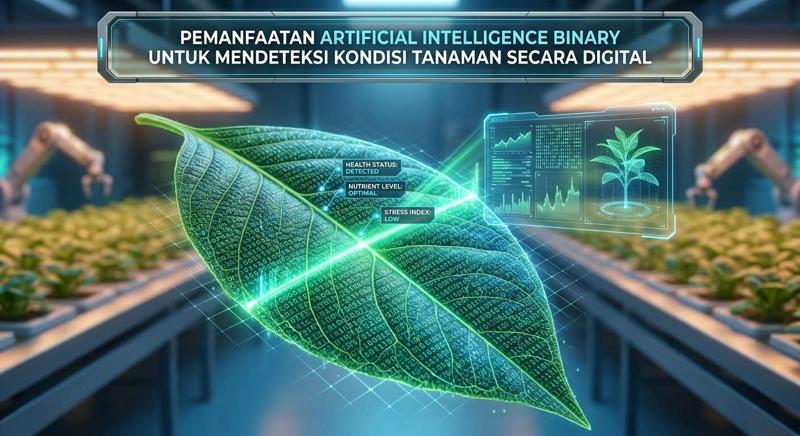
In addition to sensors, cameras can also be used. Plant images can be used to see visual characteristics such as changes in leaf color or the condition of the plant surface. This image data can be a source of additional information if the system is developed using computer vision technology.
Farmer records can also be part of the dataset. Information such as planting date, plant type, fertilization time, and plant condition can help enrich the data.
Trial Process
System trials can begin by determining the location and type of plant to be monitored. Next, sensors or data collection devices are installed as needed.
Data is collected periodically. Each data is then recorded along with the condition of the plant at the time of data collection. If plant conditions are normal, the data can be labeled 0. If conditions are found that require inspection, the data can be labeled 1.
The dataset is used for the training process. After the model has been trained, it is tested using new data.
The predicted results are then compared with actual conditions in the field. From this comparison, it can be seen whether the model provides appropriate predictions.
Monitoring Dashboard
Model results can be integrated into a simple dashboard. The dashboard can display the status of each plant area.
For example, the first area can show the status “Normal”, while the second area shows the status “Requires Checking”. The system can also display the time of data collection and sensor parameters.
Using a dashboard makes AI information easier to understand. Farmers don't have to look at probability numbers or complicated technical parameters to know the basic condition of the plant.
Model Evaluation
Evaluation is an important stage in system development. The model needs to know how well it differentiates the two conditions.
Accuracy can be used to see the percentage of correct predictions. Apart from accuracy, precision and recall can also be used to provide a more complete picture of model performance.
In certain cases, recall becomes important because the system is expected to be able to find as many plants as possible that really need inspection. However, the selection of metrics must be adjusted to the system objectives.
The evaluation results can then be used to improve the dataset and model.
Limitations
The binary model has limitations because it only distinguishes two categories. Actual plant conditions can have many variations. Plants can be in healthy condition, experience a mild water shortage, lack of nutrients, be affected by certain disorders, or experience other problems.
Therefore, binary classification can be used as an initial stage. If system requirements develop, the model can be developed into a classification with several categories.
Conclusion
Using binary AI to detect plant conditions is one form of application of digital technology in agriculture. The model can process various data and produce simple classifications that are easy to understand.
Through a combination of sensors, historical data, cameras and machine learning, the system can help the plant monitoring process. However, AI results still need to be confirmed with real conditions in the field.
Gradual trials are important to ensure that the system is truly suited to environmental characteristics and farmer needs.